ENTSO-E Defines 13 TSO Innovation Projects to 2030
European transmission operators set out actionable research concepts across six priority missions for grid modernisation and energy transition
© enlit.world
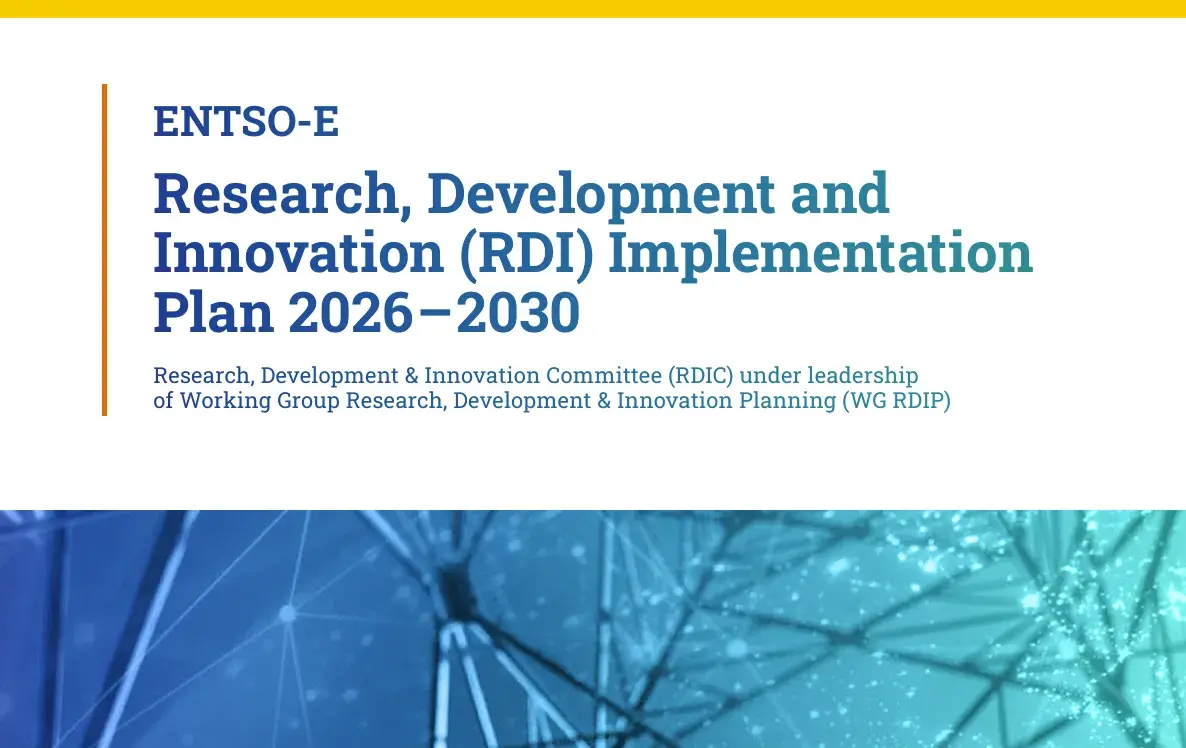
ENTSO-E has published a research, development and innovation report defining 13 transmission project concepts for implementation in the period 2026-2030. The report, drawing on ENTSO-E's RDI roadmap for the decade 2024-2034, categorises the project concepts under six priority missions determined as essential for the modernisation of Europe's electricity system.
The report can be viewed here: Research, Development and Innovation (RDI) Implementation Plan 2026 – 2030
The 13 project concepts were developed collaboratively by ENTSO-E transmission system operators, drawing on the latest outcomes of ongoing and recently completed innovation projects, whether national, TSO-led, or EU-funded. They are intended to reflect a shift towards actionable and impactful research and innovation efforts and advancement by TSOs and their stakeholders to higher technology readiness levels and operational uptake.
Six Missions and 13 Project Concepts
The project concepts are organised under six missions. The first mission, enhance grid use and sustainability, includes PC 1 (improve supply chain resilience) and PC 2 (streamline network investments). The second mission, onshore and offshore grid development and integration, comprises PC 3 (streamline HVDC concepts) and PC 4 (development of tools and procedures for optimised operation of HVDC onshore and offshore cables).
The third mission, ensure secure and stable operation of the hybrid AC/DC grid, includes PC 5 (development of near real-time tools and demonstrators for dynamic hybrid AC/DC system simulations) and PC 6 (roadmap for grid forming capability as a solution for power electronics dominated system). The fourth mission, enhance control and interoperability through digitalisation, comprises PC 7 (AI-based decision support system solutions for the future system operations), PC 8 (resilient and integrated grid operations for extreme events), and PC 9 (grid digital twin for enhanced real time observability).
The fifth mission, enhance flexibility assessment and market mechanism, includes PC 10 (integrated framework for automated DER flexibility services) and PC 11 (advanced power system forecasting for enhanced grid stability and market efficiency). The sixth mission, tools and strategies for optimal cross-sector integration, comprises PC 12 (hydrogen hub: enhancing grid resilience and flexibility through sector coupling) and PC 13 (analysis of cross-sector integration potential and role model definition).
Implementation Framework and Stakeholder Coordination
The report states that to address limiting factors, the project concepts promote harmonised standards, open interfaces, interoperability testing facilities and secure data exchange frameworks with clear access rights and synthetic data generation, to safeguard privacy and enhance the reliability of digital solutions.
Successful execution of these priorities requires coordinated action across multiple stakeholders, including TSOs, DSOs, regulatory authorities and technology providers. A coordinated approach to data management, regulatory alignment, stakeholder engagement and technological innovation is needed to ensure that not only the technical challenges are addressed but also market integration, regulatory compliance and consumer needs.
Streamlined investment methodologies must be developed to identify and assess critical infrastructure projects while ensuring fair cost and benefit distribution among stakeholders. This includes innovative financing mechanisms, accelerated implementation timelines, and effective integration of renewable energy sources through increased price convergence and enhanced security of supply.
Strategic Context and TSO Innovation Alliance
The plan is set against a backdrop of broader European TSO innovation efforts. In 2025, eight European TSOs launched the TSO Innovation Alliance to accelerate innovative solutions for the resilience and efficiency of the European electricity grid. The alliance runs an annual innovation programme and uses open calls to the European startup ecosystem for joint proof-of-concepts. Its first innovation challenge, Weather and Grid Resilience, was aimed at operational and infrastructure risks from increasingly unpredictable weather.
ENTSO-E's earlier RDI Roadmap 2020-2030 reorganised innovation work into three RDI clusters and six flagship projects, emphasising a move toward innovation with higher technology readiness levels to speed deployment of advanced infrastructures. The roadmap highlighted innovation in PMU-based wide area monitoring, AI-based decision support, power electronics converters, superconductivity, grid design and planning software, and reducing environmental impacts such as SF6 alternatives.
The report concludes that the ENTSO-E plan 2026-2030 outlines a shared pathway to accelerate the transition towards a secure, smart and sustainable European power system. By defining a comprehensive set of project concepts aligned with the most pressing RDI priorities, the plan provides a strategic framework to translate long-term system needs into concrete innovation actions, support cross-border collaboration, and drive the development of technologies essential for Europe's energy transition. The plan ultimately aims to lay the foundations for the energy system transformation needed to meet Europe's decarbonisation goals and to ensure a secure, affordable, and cost-effective energy system for all consumers, in alignment with the EU energy policy landscape and objectives.
Sign up to our monthly HVDC newsletter
Join 10k+ energy professionals. Get the latest project updates, technology breakthroughs, and market analysis delivered monthly.
No spam. Unsubscribe anytime.