Great Sea Interconnector Faces Significant Political Risk
Ankara's planned maritime legislation and naval harassment of cable survey vessels are complicating the 1,208 km HVDC link between Israel, Cyprus and Greece.
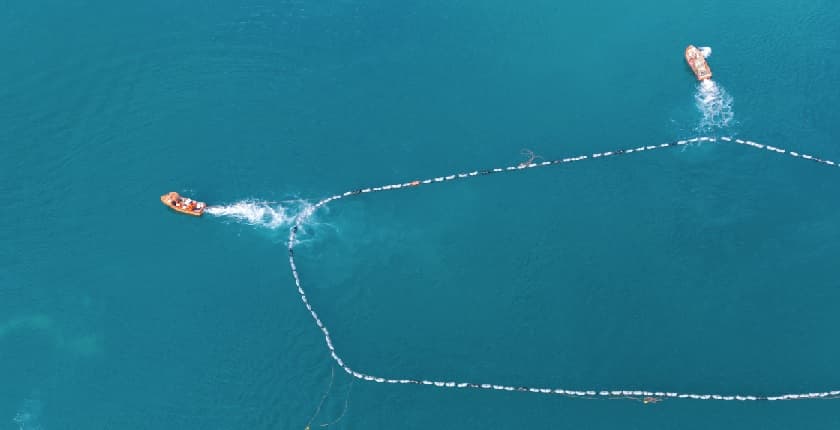
The Great Sea Interconnector (GSI), the planned 1,208-kilometre HVDC subsea link designed to connect the electricity grids of Israel, Cyprus and Greece, is facing intensifying geopolitical pressure from Turkey as Ankara moves to codify its expansive maritime claims into domestic law.
Project Overview
Formerly known as the EuroAsia Interconnector, the GSI is implemented by Greece's Independent Power Transmission Operator (IPTO) and operates as a European Project of Common Interest. The link is designed to operate at ±500 kV with an initial capacity of 1,000 MW, expandable to 2,000 MW. The Greece–Cyprus section spans 898 km across the Eastern Mediterranean, traversing seabed depths exceeding 3,000 metres, making it the world's longest and deepest submarine power cable. Nexans holds a €1.43 billion contract for the construction of the 525 kV HVDC cable connecting Crete and Cyprus, with Siemens designated as preferred supplier for converter stations. A separate 310 km section will link Cyprus to Israel in a subsequent phase. Cyprus is currently the only EU member state not connected to the European electricity grid.
The Blue Homeland Legislation
Turkey's ruling Justice and Development Party (AKP) is preparing to enact the "Law on Turkish Maritime Jurisdiction Areas" — referred to publicly as the Blue Homeland Law — with a view to submitting it to the Turkish Grand National Assembly in the coming weeks. The draft bill was unveiled at a press conference hosted by Ankara University's National Centre for the Sea and Maritime Law (DEHUKAM) on 12 May 2026. The legislation would formally consolidate Turkey's positions on the continental shelf, exclusive economic zone, contiguous zone and other maritime jurisdiction areas into a single domestic legal framework. It would also grant the Turkish president authority to designate "bodies of water with special status" and give legal force to Turkey's existing memorandum of understanding with Libya on maritime jurisdiction.
Turkey is not a signatory to the UN Convention on the Law of the Sea (UNCLOS) and disputes the principle that Greek Aegean islands generate independent exclusive economic zones. Under the proposed law, Turkey's territorial waters in the Aegean would be maintained at six nautical miles, while 12 nautical miles would apply in the Black Sea and Eastern Mediterranean. Charalambos Ellinas, senior fellow at the Atlantic Council, described the move as "an extremely worrying escalation" that transitions Ankara from political rhetoric to the formal institutionalisation of its maritime claims. Greek Foreign Minister George Gerapetritis stated that unilateral Turkish initiatives would have "no international enforcement" under international law. Dr Hay Eytan Cohen Yanarocak, an expert on Turkey at the Moshe Dayan Center at Tel Aviv University and the Jerusalem Institute for Strategic Studies, said Turkey regards the Greece–Cyprus–Israel cooperation framework as a security threat, and that the Blue Homeland legislation is intended to provide a legal basis for contesting maritime boundaries.
Naval Obstruction of Survey Operations
The GSI has already encountered direct physical interference. Seabed survey operations in the waters around the Greek islands of Kasos and Karpathos — on the route of the critical Crete–Cyprus cable section — have been repeatedly disrupted. A Turkish corvette approached the survey vessels NG Worker and Ievoli Relume during operations in early 2025, and the NG Worker has since remained anchored at the deployment site. Turkish security sources have publicly stated that the seabed survey activity constitutes a breach of international law, and Turkey has issued threats to cut any cables laid in the area. Greece declared a closed maritime area to enable surveys to proceed but has declined to advance unilaterally, citing concern over potential military confrontation. Ellinas stated that Turkey's deployment of warships against GSI survey vessels represents a deliberate strategy: "Turkey is saying clearly: these are my positions and I will enforce them."
Financing and Cost-Sharing
The Greece–Cyprus section carries a total estimated investment of €1.9 billion, of which €657 million is funded by the EU's Connecting Europe Facility (CEF). The remaining balance is expected to be split between Cyprus, covering approximately 63%, and Greece the remainder. The Israel–Cyprus section faces different conditions: the EU has indicated it will not participate in financing that segment, meaning Israel and Cyprus must seek capital from bank loans and private markets. International funds and energy companies from Europe, the United States and the Middle East are reported to be evaluating investment in the project.
In July 2025, IPTO presented a cost-benefit study for the Israel–Cyprus section, prepared by Exergia in cooperation with the National Technical University of Athens. The study confirmed the economic benefits of the link for both countries, and a formal investment request dossier was subsequently submitted to the regulatory authorities of Israel and Cyprus for a joint decision on Cross-Border Cost Allocation (CBCA). Israel's Ministry of Energy has stated that the project is in the final stages of its cost-benefit analysis, after which cost-sharing arrangements between the three countries will be finalised.
Israel's Energy Security Case
Israel's electricity system currently operates without any cross-border connections. A link to Cyprus, Greece and the broader European grid would provide an alternative supply route in scenarios involving damage to domestic generation capacity or extreme demand events, including those resulting from military escalation targeting critical infrastructure. A senior Greek official told Globes that Greece, Cyprus and Israel remain committed to advancing the project, and that the United States has expressed support at multiple levels.
European TSO Position
In April 2026, the European transmission system operator network rejected a proposal by Turkish Cypriot authorities for a 95 km cable connecting Cyprus to Turkey's electricity transmission network, reaffirming that the GSI remains the sole designated interconnector project for the region.
Sign up to our monthly HVDC newsletter
Join 10k+ energy professionals. Get the latest project updates, technology breakthroughs, and market analysis delivered monthly.
No spam. Unsubscribe anytime.