State Grid kicks off new HVDC project in Brazil
State Grid has started construction on a 1,468 km ±800 kV UHVDC line, Brazil's largest-ever power transmission investment, due for completion in 2029.
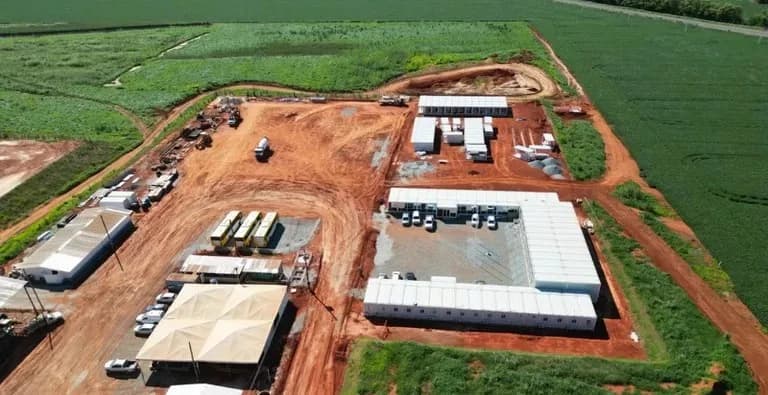
© SGCC
State Grid Corporation of China has broken ground on a 1,468-kilometer ±800 kV ultra-high voltage direct current (UHVDC) transmission line in Brazil, marking the largest electricity transmission investment in the country's history. The project, formally titled the New Energy in Northeast Brazil UHVDC Transmission Project, will run from the Graça Aranha converter station in Maranhão state to the Silvânia converter station in Goiás state, crossing Maranhão, Tocantins, and Goiás.
The line has a rated transmission capacity of 5,000 MW and will bundle wind, solar, and hydropower generated in Brazil's resource-rich northeast and north, channeling it to major load centers including the federal capital, Brasília. Once operational, it is expected to meet the electricity needs of around 12 million people. The project also includes two converter stations and supporting 500 kV AC infrastructure, and is being independently invested in, built, and operated by State Grid Brazil Holding, State Grid's Brazilian subsidiary, under a 30-year concession.
State Grid Brazil Holding secured exclusive development rights for the project on December 15, 2023, in what was Brazil's largest-ever infrastructure power transmission auction, having previously bid for the Belo Monte UHVDC projects. The concession agreement was signed on April 3, 2024, at the Presidential Palace in Brasília, witnessed by Chinese Ambassador to Brazil Zhu Qingqiao, Brazil's Minister of Mines and Energy Alexandre Silveira, and Sandoval Feitosa, head of Brazil's National Electric Energy Agency (ANEEL). The line is the third overseas UHVDC transmission project undertaken by State Grid, following the Belo Monte Bipole I and II lines. Full operation is scheduled for 2029.
Once complete, the project is projected to facilitate the consumption of more than 20 billion kilowatt-hours of clean energy annually, equivalent to reducing carbon dioxide emissions by 6.84 million metric tons a year. Ye Xiaoning, a senior engineer at the State Grid Energy Research Institute's new energy department, said the project clears the bottleneck for renewable energy delivery from northeastern Brazil, exports China's UHV technology and construction and operation systems, and sets a benchmark for energy infrastructure cooperation across Latin America. He added that the internationalization of China's UHV standards could also expand the global market share of Chinese UHV technology providers.
Sign up to our monthly HVDC newsletter
Join 10k+ energy professionals. Get the latest project updates, technology breakthroughs, and market analysis delivered monthly.
No spam. Unsubscribe anytime.